Launching a commercial landscaping or turf care operation offers an exceptional pathway toward building a scalable, highly profitable enterprise. However, transitioning from casual residential mowing to operating a full-fledged lawn maintenance company requires investing in commercial-grade equipment that delivers professional speed, continuous reliability, and superior cut quality. Selecting the right tools upfront ensures your field crews operate with peak efficiency, maximize daily route density, streamline routine labor, and present a polished, credible image to potential residential and commercial clients.
The Importance of Commercial-Grade Gear
Before purchasing your initial tool suite, it is vital to understand the fundamental distinction between residential and commercial outdoor power equipment. While consumer-grade mowers and trimmers purchased at big-box home improvement stores are adequate for occasional weekend use on a single lawn, they are not engineered to withstand the rigorous demands of daily commercial service.
Commercial equipment features heavy-gauge reinforced steel frames, high-displacement industrial engines, heavy-duty air filtration systems, and fully serviceable hydraulic transmissions. These machines are built to run continuously for six to eight hours a day, five days a week, through thick grass, high heat, and dusty conditions. Investing in commercial-grade tools protects your initial capital by drastically reducing mechanical breakdowns, minimizing costly project downtime, and providing the precise, clean cut that high-paying property owners expect from a professional service provider.
Core Commercial Mowing Machinery
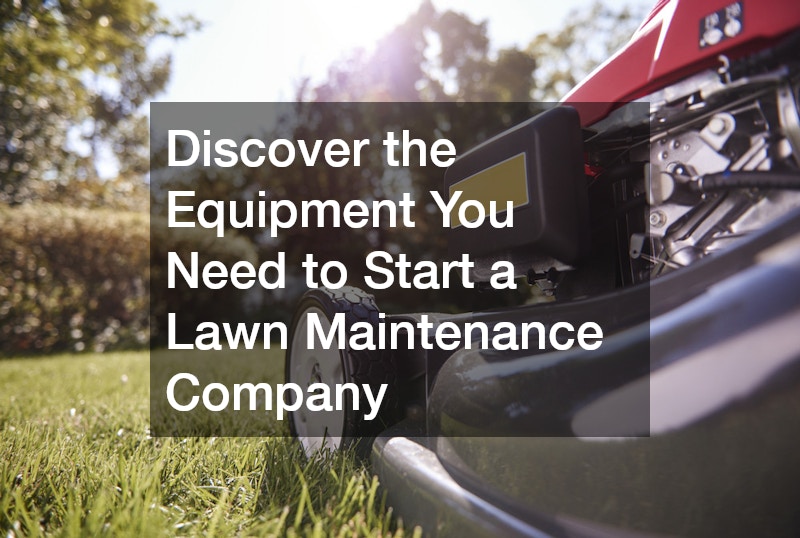
Your primary mowers represent the single largest capital investment for your business. Commercial machines feature heavy-duty welded steel decks, powerful gas or diesel engines, and high blade-tip speeds designed to process heavy grass without bogging down or clumping clippings.
-
Zero-Turn Riders (ZTR): Commercial zero-turn mowers offer unmatched ground speed and maneuverability across medium to large residential lawns and expansive commercial business parks. Their dual-hydrostatic drive systems allow operators to steer each drive wheel independently, making zero-radius turns effortless and cutting total mowing time by up to fifty percent compared to traditional tractor mowers.
-
Stand-On Mowers: Stand-on mowers have gained massive popularity among commercial lawn care operators due to their compact footprint and excellent operator visibility. They allow workers to hop on and off quickly to pick up debris, offer superior stability on moderate slopes, and take up significantly less trailer deck space than full-sized riding mowers.
-
Commercial Walk-Behind Mowers: A 36-inch or 48-inch commercial walk-behind mower provides critical versatility. These agile machines handle steep slopes, tight backyard gates, and delicate turf zones where heavier riding mowers might leave deep wheel ruts, scalp high spots, or tear up wet sod during tight turns.
-
21-Inch Heavy-Duty Push Mowers: Having a reliable, heavy-duty 21-inch mower on your trailer is mandatory for small enclosed courtyards, obstacle-heavy flowerbeds, and tight perimeter strips that larger commercial mower decks simply cannot access.
Essential Handheld Power Tools
While mowers handle the open turf areas, professional handheld power tools provide the crisp edges, clean borders, and debris-free surfaces that separate amateur lawn care from a premium lawn maintenance company.
String Trimmers and Edgers Commercial straight-shaft string trimmers are essential for clearing grass around fence lines, trees, mailbox posts, retaining walls, and structural foundations. Straight-shaft designs offer longer physical reach, durable solid-steel drive shafts, and improved operator balance compared to curved-shaft residential models. Additionally, dedicated walk-behind or stick edgers utilize rigid steel blades to carve sharp, clean soil grooves along concrete driveways, stone sidewalks, and garden beds, giving properties a manicured, professional finish.
Commercial Leaf Blowers Clearing grass clippings, loose soil, and leaf litter off paved surfaces is the final crucial step in completing any mowing service. Backpack blowers powered by high-cubic-feet-per-minute (CFM) gas engines allow operators to blast wet, heavy clippings off wide driveways, parking lots, and walkways quickly, saving valuable labor time on every property stop.
Transportation, Storage, and Safety Equipment
-
Utility Trailer and Rack Systems: A sturdy 12 to 16-foot open or enclosed dual-axle utility trailer equipped with heavy-duty fold-down ramp gates keeps your equipment organized and secure during transit. Outfitting your trailer with commercial trimmer racks, backpack blower hangers, gas can cages, and heavy-duty wheel chocks optimizes floor space and protects your tools from transport damage.
-
Personal Protective Equipment (PPE): Protect your field crew by stocking high-visibility safety vests, steel-toe work boots, heavy-duty work gloves, noise-canceling ear protection, and shatterproof safety glasses to guard against flying rocks and airborne debris.
-
Field Maintenance and Secondary Tools: Equip your mobile rig with essential maintenance supplies, including extra trimmer line spools, spare pre-sharpened mower blades, a high-lift mower jack, safety-approved fuel cans, 2-stroke engine oil, hand pruners, flathead shovels, and sturdy leaf rakes.
Long-Term Value and Commercial ROI
Investing in commercial-grade power equipment rather than residential-grade tools directly protects your operational profit margins over time. Professional-grade machinery features reinforced components designed to withstand constant trailering vibration and heavy daily use. High-efficiency commercial mowers allow a lean two-person crew to complete double the property stops per day compared to low-tier equipment, directly increasing gross daily revenue while lowering maintenance costs and equipment replacement frequency over the operational life of the business.
Equipment Startup Checklist for New Businesses
-
Secure Core Mowers: Pair a 48-inch or 52-inch zero-turn rider or stand-on mower with a versatile 36-inch walk-behind mower to cover diverse lawn sizes and gate access widths easily.
-
Purchase Handheld Power Tools: Buy two commercial straight-shaft string trimmers, one dedicated stick edger, and a high-CFM backpack blower from a reputable commercial brand.
-
Set Up Transportation: Invest in a dual-axle utility trailer outfitted with lockable trimmer racks, gas can holders, and heavy-duty equipment tie-down straps.
-
Stock Maintenance Supplies: Keep spare mower belts, extra air filters, sharp replacement blades, 2-stroke engine mixing oil, and complete sets of personal safety gear ready for daily field operation.